The shoulder is one of the most remarkable joints in the human body. It gives us the ability to hang, press, throw, climb, swim, and support load overhead. It is also one of the top 3 most commonly injured areas that I see in my practice treating athletes (knee and lumbar spine are the other two.)
Most shoulder pain is not a “shoulder-only” problem.
It is usually the result of poor posture and movement options, limited mobility, inadequate stability, and cumulative stress over time.
The good news?
With the right approach, many shoulder issues are preventable—and even chronic, nagging pain can often be reversed before they become true injuries.
Let’s break this down.
Built for Mobility, Not Stability
When people talk about the “shoulder joint,” they are usually referring to the glenohumeral joint—where the ball of the humerus sits in a relatively shallow socket on the scapula.
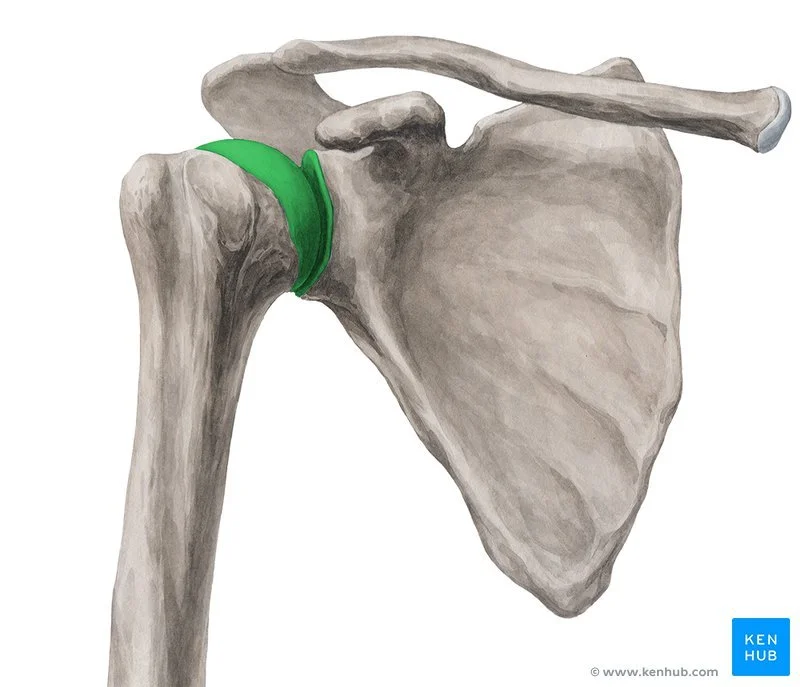
Glenohumeral Joint
This design is often compared to a golf ball on a tee.

This shallow ball-and-socket design gives us enormous mobility, but limited structural stability. Unlike the hip—a much deeper ball-and-socket joint with significant bony congruency—the shoulder relies heavily on active stability, meaning your muscles.
Specifically:
Rotator Cuff
These muscles help “hug” the head of the humerus into the socket and keep the joint centered.
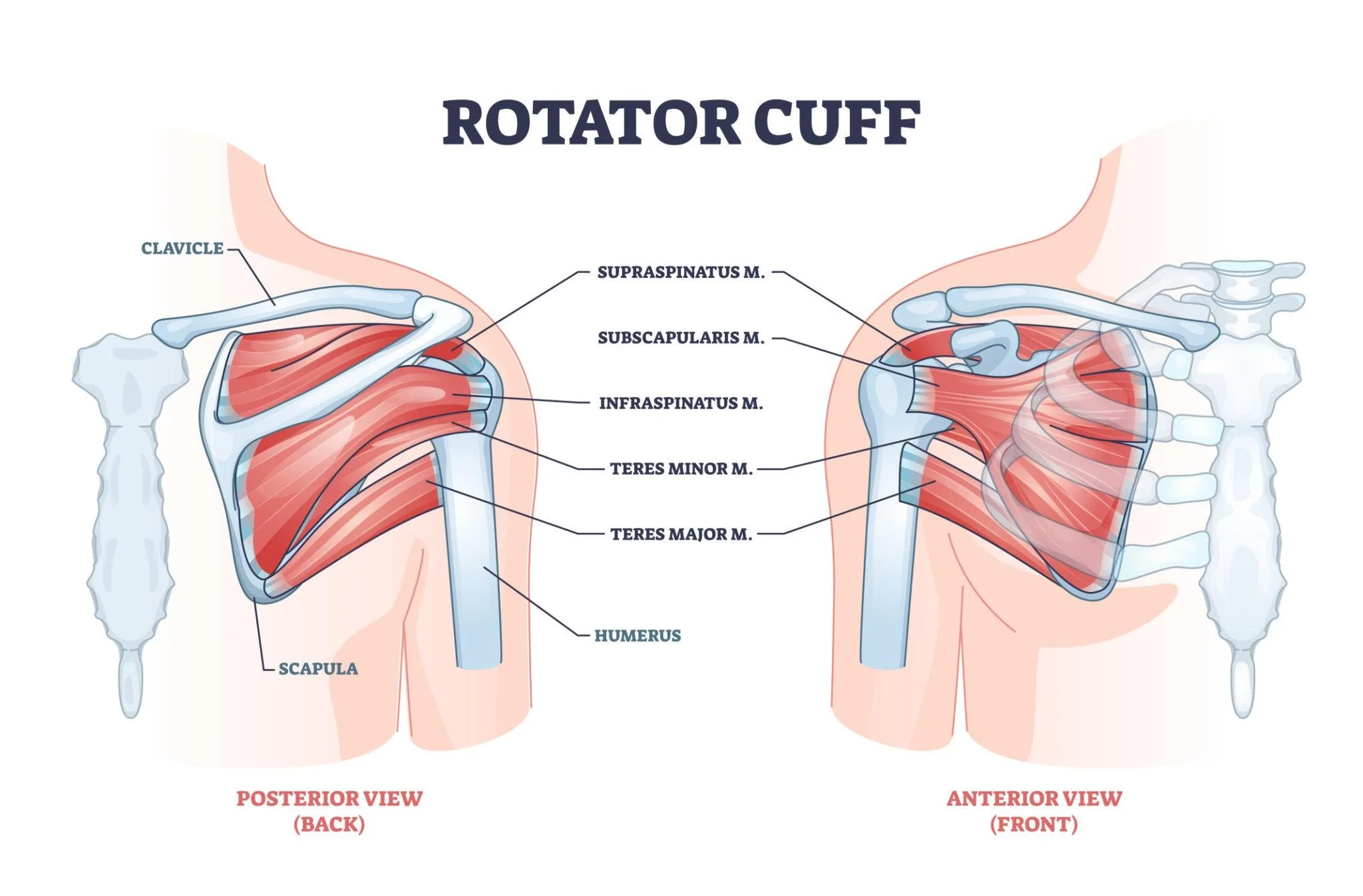
Rotator Cuff: supraspinatus, infraspinatus, teres minor, subscapularis
Scapular Stabilizers
These muscles control movement and positioning of the shoulder blade, which is how the entire upper extremity attaches to the torso.
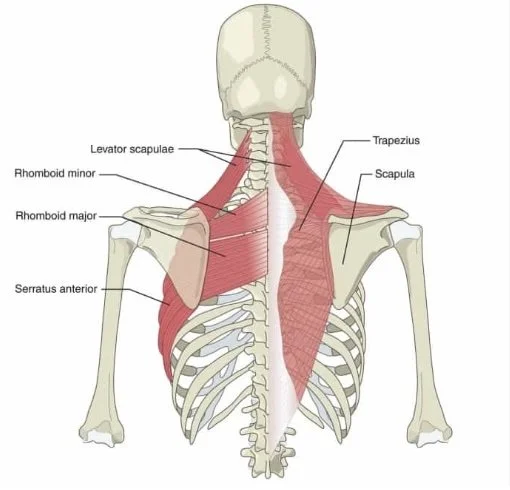
Scapular Stabilizers: mid/lower trapezius, serratus anterior, rhomboids
It is essential that our shoulder stabilizers muscles are strong to provide dynamic support to this highly-mobile joint. This is especially important for overhead athletes (pull up, jerk, snatch, handstand, wall walk, tennis, pickleball, etc.)
The Shoulder Rarely Acts Alone
In addition to local stabilizers, shoulder health is profoundly influenced by posture and how the rest of the body contributes to movement.
Key influences include:
Thoracic spine mobility (especially extension and rotation)
If you don’t have adequate mid-back (thoracic) extension (think: ability to sit up tall and avoid a rounded-shoulder posture), more motion is forced to come from the shoulder in overhead movements.Rib cage position and breathing mechanics
If your rib cage lives in a flared, overextended position, your rotator cuff will struggle to center the joint.Scapular control
If the scapula does not upwardly rotate or posteriorly tilt, overhead motion becomes compressed at the front of the shoulder, often causing pain and dysfunction.
In other words: the shoulder is only as healthy as the system it lives in.
4 Exercises for Shoulder Health
If we want to optimize shoulder health, we must strengthen our stabilizers and address posture and mobility.
These are foundational movements I regularly use with athletes who want to train hard and stay durable. They can also be helpful for addressing nagging shoulder pain. If you are concerned about your symptoms, see the section below on when to seek professional help.
1. External Rotation
Rotator Cuff Strength
Why it matters
Improves the shoulder’s ability to center the joint and tolerate load.
Focus on
Keep the elbow pinned at your side. Rotate the arm outward slowly and control the return. You should feel this around the back of the shoulder and into the lateral deltoid.
Dosage
2–3 sets of 10–15 reps, 3x per week
Light resistance (small stabilizing muscles)
Examples:
Banded External Rotation
Banded Rotator Cuff Pumps
2. I’s + T’s
Parascapular Strength
Why it matters
Strengthens mid and lower trapezius and reinforces healthy scapular positioning.
Focus on
Light load, perfect control, no momentum. Initiate movement from the shoulder blades.
Dosage
2–3 sets of 10–15 reps, 3x per week
Examples:
Banded I’s & Banded T’s
Chest-Supported I’s & Chest-Supported T’s
3. Bench Stretch or Banded Lat Stretch
T-spine & Lat Length
Why it matters
The lats are large muscles heavily used in rowing, pulling, deadlifts, ski erg, and many other athletic movements. When they become stiff, they can significantly limit overhead mobility and increase stress on the shoulder.
Limited overhead range is also highly influenced by thoracic spine mobility—a topic deserving its own deep dive.
Focus on
Use your breath to help expand the rib cage and deepen the stretch.
Dosage
2–3 minutes, 3x per week
Examples:
Bench Stretch for Lats and T-spine
Banded Lat Stretch at Rack
4. Pec Smash
Pectoral Muscle Length
Why it matters
Overactive pectorals can pull the shoulder forward and limit overhead mechanics.
Focus on
Find tight or tender areas and use slow breathing. Gently move the arm while applying pressure. Explore the region without forcing into sharp pain.
Dosage
2 minutes per side, 3x per week
Examples:
Pec Minor Smash at Wall
Pec Smash with Orb
When to Seek Professional Help
Early evaluation often leads to faster resolution, fewer training interruptions, and a clearer plan forward.
Consider seeking professional help if you experience:
Pain lasting longer than 7–10 days despite reducing training volume
Pain that worsens with warm-up rather than improves
Night pain or disrupted sleep
Sharp pain, catching, clicking, or feelings of instability
Loss of strength or range of motion
Recurrent flare-ups with the same movements
Pain following a fall, collision, or traumatic event